rPET and the Reality of Sustainable Fashion: What Recycled Materials Can — and Cannot — Solve
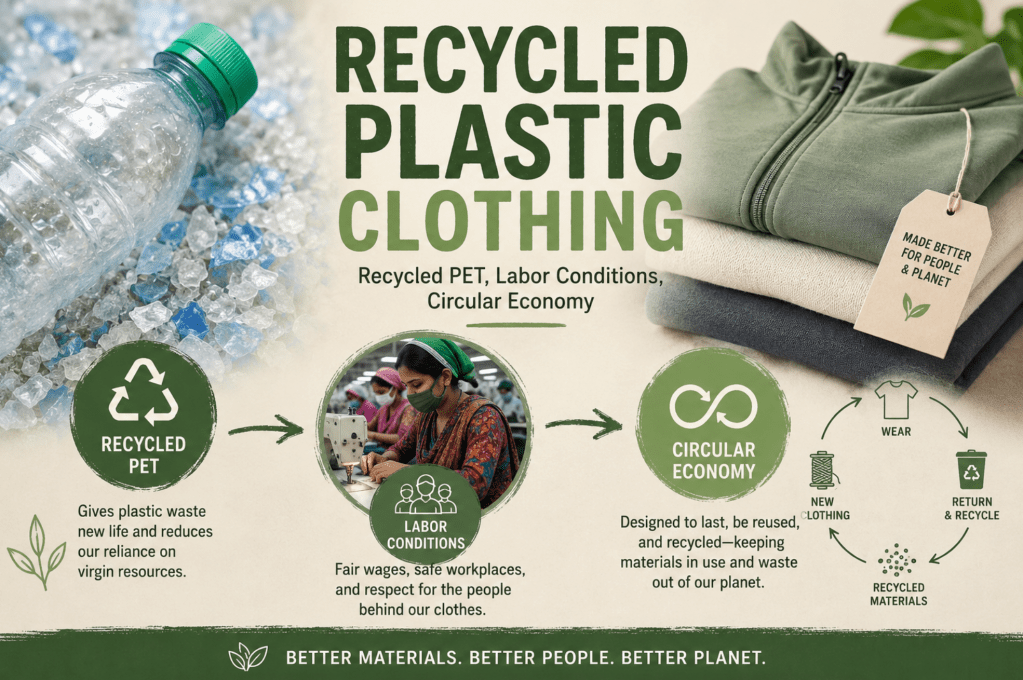
Sustainable fashion often begins with a reassuring label.
“Made from recycled plastic bottles.”
For many people, that phrase creates an immediate sense of progress — a feeling that choosing one product over another may help reduce waste and support a better system. The intention behind that choice matters. But the reality behind recycled fashion materials is more layered than most labels suggest.
At THE PLIÉ, material conversations are approached with honesty rather than simplified marketing language. Sustainability is important, but meaningful progress requires understanding not only what materials improve, but also where the system still falls short.
rPET — recycled polyethylene terephthalate — is one of the clearest examples of this complexity.
What Is rPET?
rPET stands for recycled PET fibre, a material created by processing post-consumer PET plastics, most commonly disposable beverage bottles, into textile fibre.
Once transformed, the material becomes fabric used across fashion, bags, insulation, outerwear, and industrial textiles.
The concept itself is valuable: instead of relying entirely on virgin petroleum extraction, existing plastic enters another production cycle.
But what often gets overlooked is how industrial and demanding that process actually is.
The Hidden Complexity Behind Recycled Polyester
Turning a discarded bottle into wearable fabric involves a long sequence of industrial processing.
Collected PET bottles must first be sorted by colour and composition because different plastics behave differently during recycling.
From there, the material undergoes:
- mechanical shredding into uniform fragments
- repeated washing cycles with caustic soda
- removal of labels, adhesives, and contaminants
- conversion into PET flakes
- high-temperature melting between 250°C and 280°C
- melt extrusion through spinnerets
- cooling, stretching, and yarn finishing
The process requires heat, filtration systems, industrial machinery, maintenance, chemical cleaning, and precise production control.
While rPET generally produces a lower carbon footprint than virgin polyester, it still carries environmental costs through energy use, chemical processing, and manufacturing infrastructure.
This distinction matters because sustainable fashion should not rely on oversimplified narratives.
Why Fashion Still Uses rPET
Despite these limitations, rPET remains one of the most important transitional materials in fashion today.
The reason is simple: the industry still depends heavily on synthetic textiles, and recycled polyester reduces part of the demand for virgin petroleum-based production.
rPET also offers practical advantages for modern fashion:
- durability
- lightweight structure
- flexibility
- wrinkle resistance
- water resistance
- suitability for travel and everyday use
For brands like THE PLIÉ, these qualities support products designed around movement, portability, and longevity.
Materials matter, but usability matters too. A product that remains part of daily life for years often carries greater long-term value than one replaced repeatedly.
The Labour Behind “Eco-Friendly” Materials
One of the most overlooked parts of sustainability conversations is labour.
The original source behind this discussion describes physically demanding conditions inside recycling facilities: workers replacing heavy spinneret systems, handling high-temperature equipment, changing contaminated filter systems, and working within loud industrial environments.
This is not about criticizing recycling itself.
It is about recognizing that sustainability exists within real industrial systems involving energy, labour, infrastructure, and human effort.
Fashion often presents sustainability through polished visual campaigns while leaving the complexity invisible.
But responsible design begins with acknowledging the full system.
The Circular Economy and Its Limits
rPET is frequently connected to the idea of the circular economy — a production model intended to keep materials in use for as long as possible while reducing waste and virgin resource extraction.
In theory, the concept is powerful.
In practice, fashion’s recycling systems remain incomplete.
According to the Ellen MacArthur Foundation referenced in the original article, less than 1% of clothing material globally is recycled back into new clothing.
Most recycled textiles eventually move into lower-grade industrial uses rather than returning fully into fashion systems again.
This means the industry is not yet operating within a truly closed loop.
The system still leaks.
Why Buying Less Matters More Than Buying Perfectly
One of the most important ideas in sustainable fashion is also the simplest:
better materials alone cannot solve overconsumption.
The original article makes this point clearly. Recycling remains a response to waste, not a complete solution to what creates the waste in the first place.
Fashion continues producing enormous quantities of garments designed for short-term use.
This is why longevity matters so deeply.
A product designed to remain useful for years creates a different environmental relationship than one designed around rapid replacement cycles.
At THE PLIÉ, sustainability is approached through:
- material awareness
- thoughtful production
- lower-impact fabrics
- product longevity
- emotional durability
- slower consumption habits
The goal is not perfection.
The goal is creating products people continue valuing over time.
Why rPET Still Has Value
None of this means rPET lacks importance.
Using recycled materials remains preferable to relying entirely on virgin synthetic production. Recycled systems still reduce landfill pressure and help extend the life cycle of existing materials.
But sustainable fashion becomes most meaningful when paired with:
- fewer but better products
- stronger durability
- thoughtful consumption
- responsible sourcing
- long-term usability
Sustainability cannot exist through material labels alone.
It must exist through behaviour, production systems, and design philosophy together.
THE PLIÉ and a More Honest Future for Fashion
At THE PLIÉ, material exploration is rooted in honesty rather than perfection.
The brand continues exploring recycled and plant-based materials because fashion must move toward better systems. But sustainability is never presented as complete or solved.
Real progress comes through balance:
- better materials
- better design
- lower waste
- longer product life
- slower replacement cycles
- deeper connection between people and the products they own
Because the future of fashion may not depend on endlessly producing “greener” products.
It may depend on creating fewer products worth keeping.
 THE PLIÉ Blog
Leave a comment